
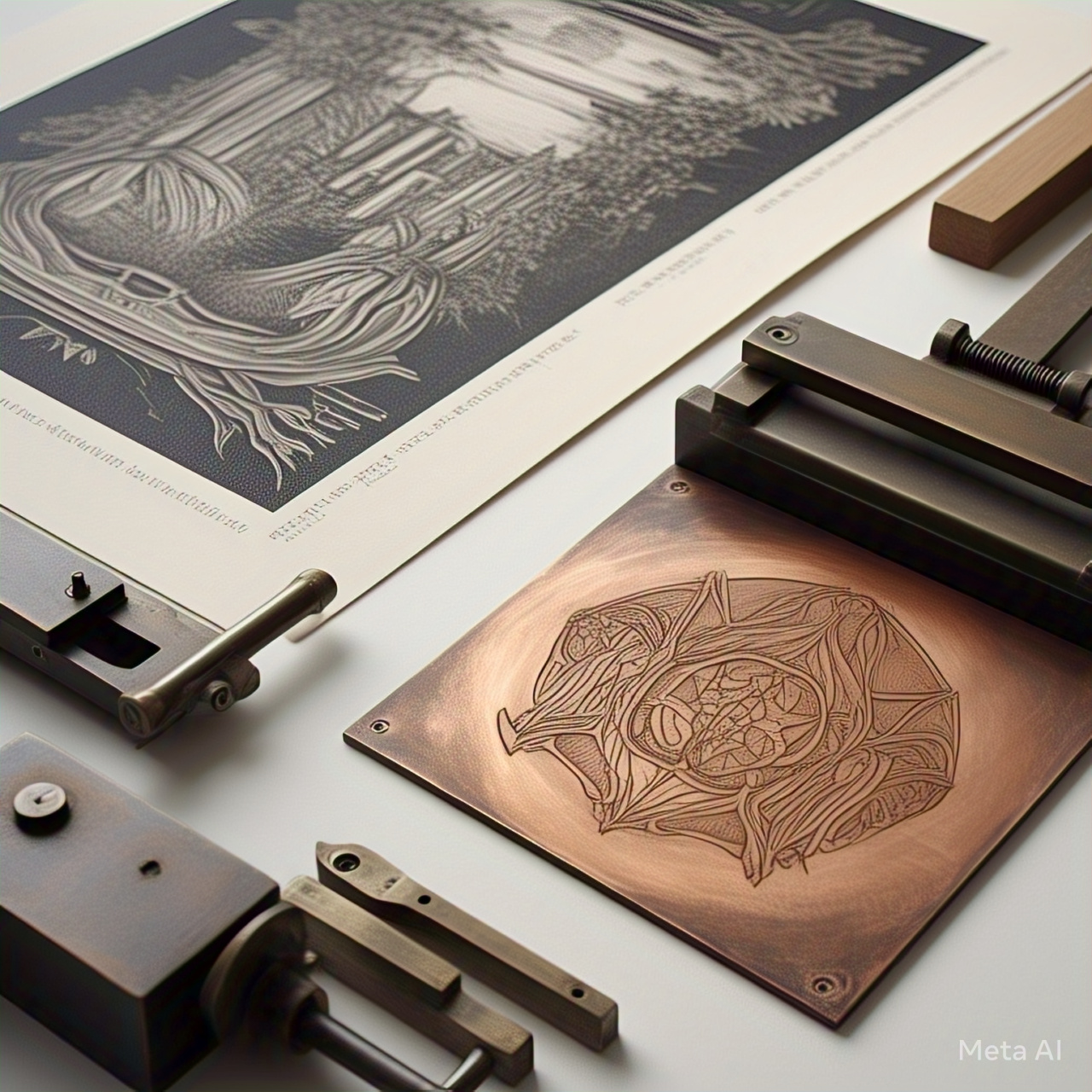
Intaglio printmaking is a centuries-old technique used by artists to create finely detailed prints through an incised surface. Unlike relief printing, where ink sits on raised areas, intaglio prints are produced by applying ink into recessed lines and grooves, which are then transferred onto paper through high pressure. This method allows for rich textures, tonal variations, and deep contrasts, making it a favoured choice for printmakers throughout history. Below, we explore the main types of intaglio printmaking.
Engraving
Engraving is one of the oldest intaglio techniques, dating back to the 15th century. It involves cutting lines directly into a metal plate (typically copper or zinc) using a burin, a sharp tool that creates clean, precise incisions. Ink is pushed into these grooves, and after wiping the surface, damp paper is pressed onto the plate, leaving a sharp, crisp image.
Etching
Etching uses acid to create incised lines instead of manually carving them. The metal plate is first coated with an acid-resistant ground, then an image is drawn with a needle, exposing the metal. The plate is submerged in an acid bath, where the exposed areas are bitten, deepening the lines. The longer the plate remains in the acid, the darker the resulting lines in the print. This method allows for greater fluidity and expressive line work.
Drypoint
Drypoint is similar to engraving but employs a needle to scratch the surface of a metal plate, creating burrs—tiny ridges of displaced metal that hold extra ink. These burrs result in a rich, velvety line quality that is characteristic of drypoint prints. However, since the burrs wear down quickly under the press, drypoint prints have a limited edition size compared to other intaglio techniques.
Mezzotint
Mezzotint is a tonal intaglio process that produces rich blacks and smooth gradations. The artist roughens the entire plate with a rocker tool, creating a textured surface that would print as a deep black. Areas are then smoothed or burnished to create lighter tones. This technique is ideal for creating soft, atmospheric images with dramatic lighting effects.
Aquatint
Aquatint is used to produce tonal variations rather than lines. A fine rosin powder is dusted onto the plate and melted to create a granular texture. When the plate is exposed to acid, the acid bites around the rosin particles, creating a stippled effect. By controlling the exposure time or stopping out certain areas, artists can achieve a wide range of tones, from delicate greys to deep blacks.
Soft-Ground Etching
A variation of traditional etching, soft-ground etching uses a softer resist that remains slightly tacky. Artists can press textured materials like fabric or leaves into the ground or draw with a pencil on a thin sheet placed over the plate. This method captures delicate details and organic textures, adding a unique character to the print.
Collagraph
Collagraph is a more experimental intaglio process that involves building up texture on a plate using materials like cardboard, fabric, or acrylic mediums. The plate is then sealed, inked, and printed in the same manner as traditional intaglio techniques. This method allows for a broad range of textures and creative possibilities.
Intaglio printmaking is a versatile and deeply expressive art form that has been embraced by artists for centuries. Whether through the precision of engraving, the expressive lines of etching, or the rich tones of mezzotint, intaglio offers endless possibilities for artistic exploration. Today, both traditional and contemporary printmakers continue to experiment with these methods, keeping the legacy of intaglio alive.