
Collagraph printmaking is a wonderfully versatile and tactile technique that has captured the imagination of artists around the world. Unlike more traditional printmaking methods like etching or woodcut, collagraphy is all about building up a surface using collage materials, creating rich textures and layers that translate beautifully onto paper.
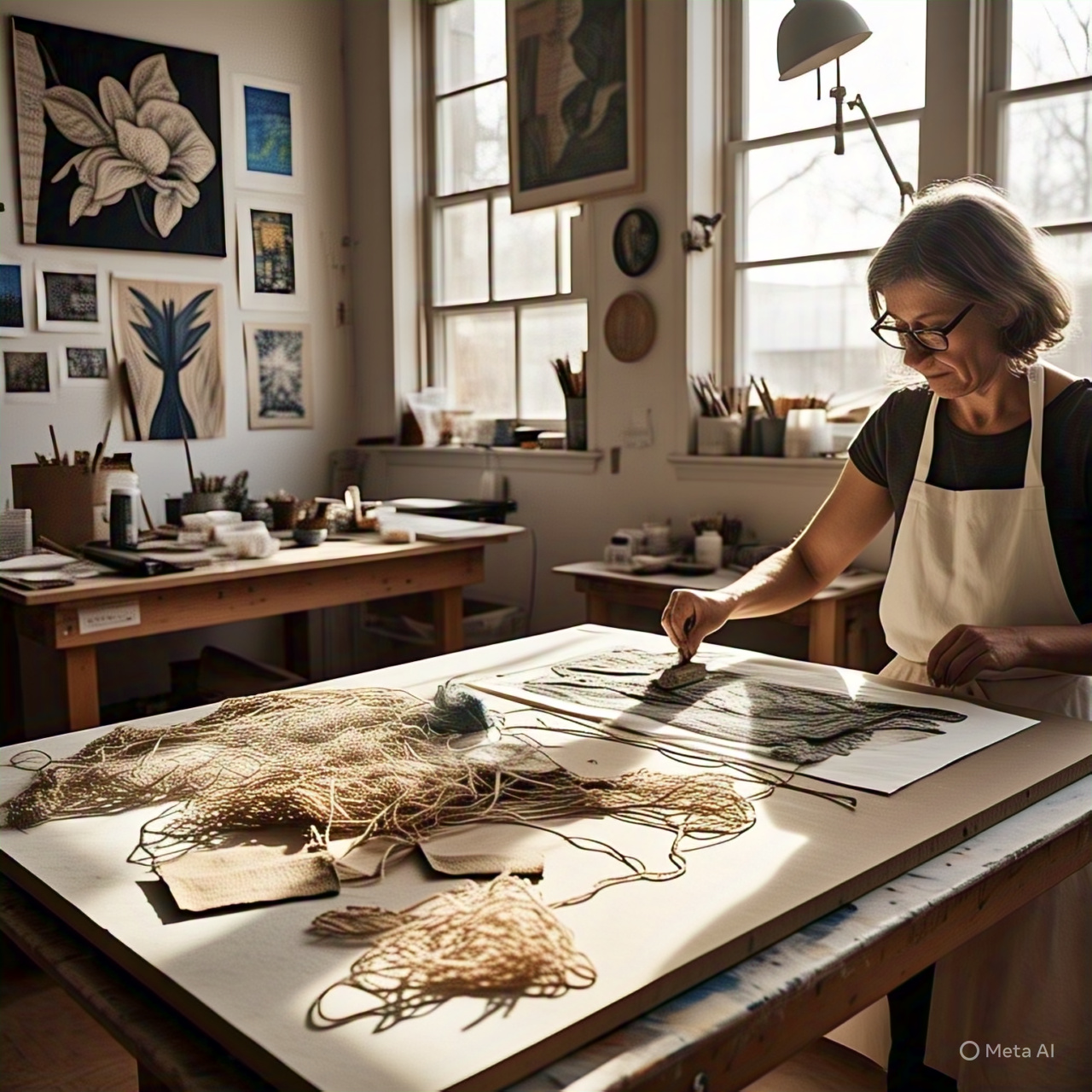
The word collagraph combines collage and graph, meaning “to draw with collage.” To create a collagraph plate, artists glue a variety of materials—such as fabric, string, leaves, sandpaper, lace, or even modeling paste—onto a sturdy base like cardboard, wood, or metal. Once sealed with varnish or shellac, the plate can be inked and printed in either relief (inking the raised surfaces) or intaglio (inking and wiping the plate so that ink remains in the recesses). The result is a print with a distinctive, textural quality that can range from subtle to dramatic.
One of the joys of collagraphy is its openness to experimentation. Because almost any material with texture can be used, each artist can develop a unique visual language. This freedom has made collagraph printmaking especially appealing not only to printmakers but also to painters, mixed media artists, and sculptors looking to explore new dimensions in their work.
Several well-known artists have embraced the collagraph technique. British printmaker Glen Alps is often credited with coining the term “collagraph” in the 1950s and was instrumental in popularising the process in the United States. In the UK, artists like Barbara Rae have used collagraphy to create vibrant, layered works that combine rich colours with bold textures. Rae’s prints, for example, often explore landscapes, with the collagraph process perfectly suited to capturing the rugged terrain and atmospheric effects.
Another notable figure is Katherine Chang Liu, whose collagraphs blend abstract composition with intricate textures, drawing from both Eastern and Western artistic traditions. Her work demonstrates how collagraphy can convey both physical texture and emotional depth.
For artists new to the process, collagraphy offers an accessible entry point into printmaking. Basic materials are easy to source, and the process encourages hands-on, intuitive exploration. Beginners might start by experimenting with different textures—string for lines, fabric for soft areas, and sandpaper for grit—and seeing how these translate into inked prints. As skills develop, more complex plates and multi-colour printing techniques can be explored.
Whether you are drawn to bold relief effects or subtle tonal variations, collagraph printmaking opens up an exciting world of texture, layering, and creative discovery. It remains a favourite among artists for its versatility and the richness it brings to each impression pulled from the press.